How Word Search Puzzles Improve Early Literacy Skills
Written by
MyPuzzlePrint TeamHow Word Search Puzzles Improve Early Literacy Skills
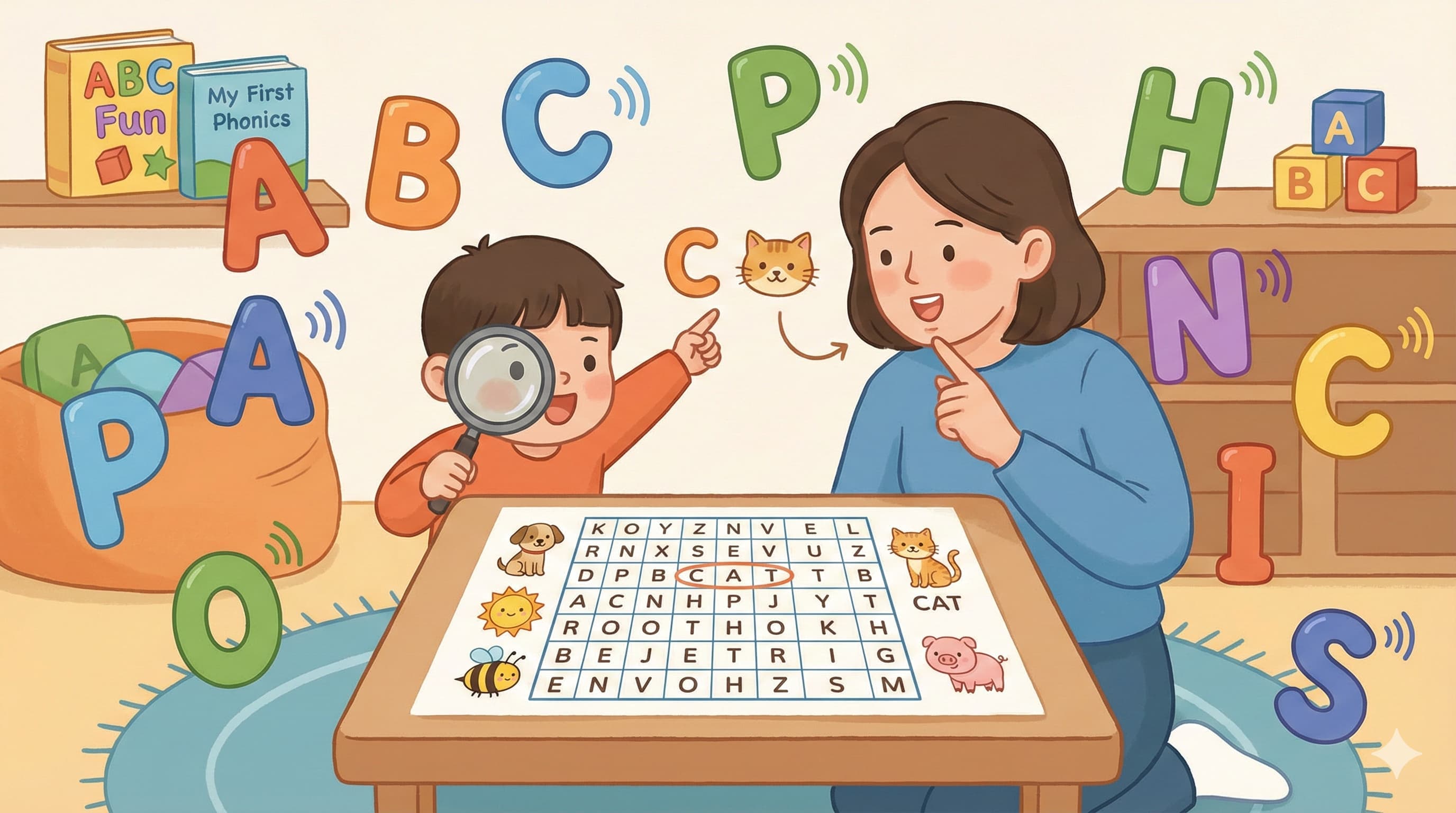
Teaching a child to read is an exciting journey, and word search puzzles can be a surprisingly useful companion along the way. For preschoolers and early elementary kids, word searches serve as a playful introduction to letters and words. By finding letters and simple words in a grid, young learners practice key reading readiness skills without it feeling like “work.” In this article, we’ll show how word search puzzles improve early literacy skills such as letter recognition, sight word mastery, and even basic phonics. The best part? Kids have a blast doing them, which means they stay engaged in learning.
Recognizing Letters and Sight Words
One of the first steps in learning to read is knowing the alphabet, and word searches give kids plenty of letter recognition practice. As children scan a puzzle, they must identify specific letters across a jumble of characters. This helps reinforce their ability to visually recognize each letter of the alphabet. In fact, many beginner word searches are designed specifically for this purpose - for example, a puzzle might ask kids to find all the vowels in a grid. Activities like these strengthen a child’s instant recall of letter shapes and names. Furthermore, word searches frequently use lowercase letters in a clear, child-friendly font, which is exactly what young readers encounter in storybooks. This consistency makes it easier for kids to bridge puzzle play with real reading. As children advance, puzzles start hiding simple sight words (common short words like “the,” “and,” or “cat”). Every time a child finds a sight word in a puzzle, it reinforces that word’s visual form in their memory. Repeated exposure in this fun format can help early readers recognize those high-frequency words more quickly when they see them in a book.
Reinforcing Phonics and Letter Patterns
Word search puzzles can also support phonics - the understanding of letter sounds - in young readers. How? When a child searches for a word, they often quietly say the word or sound it out to remember what they’re looking for. For instance, if the word is “sun,” a child might whisper “s-uh-n” while scanning the letters. This engages them in connecting letters to sounds, a foundational phonics skill. Some puzzles are even tailored for phonics practice, focusing on word families or rhyming chunks (like finding all the “-at” words: cat, hat, rat). By hunting for these letter patterns, kids become more aware of common phonetic chunks. They learn that letters working together (like “sh” or “at”) consistently make certain sounds, which is a key part of decoding words. The act of searching forces them to pay close attention to letter order as well. A child looking for “dog” has to remember that D-O-G appears in that sequence. This helps imprint the spelling in their mind. In short, word searches encourage children to engage with how words are built, complementing the phonics lessons they are learning in class or at home.
Developing Reading Direction and Fluency
Another early literacy skill that word searches can foster is understanding reading direction and improving visual scanning - both important for reading fluency. Typically, beginner word searches hide words left-to-right (horizontally), mirroring the direction we read text in English. As children solve these puzzles, they naturally practice scanning lines of letters from left to right, training their eyes to move in the correct reading direction. This is great reinforcement for kids who are just learning that English text flows in a line across the page. Some puzzles also place words top-to-bottom vertically (another orderly direction), but importantly, you won’t see backward or diagonal words in most kid-friendly puzzles - those tricky orientations are usually left out to avoid confusing early readers. By keeping word searches “reading-friendly,” children build good reading habits even during play. Additionally, the visual scanning practice in word searches can aid reading fluency. The ability to quickly spot a sequence of letters in a grid is similar to quickly recognizing words in a sentence. In fact, being able to swiftly discriminate letters and letter patterns is a skill that contributes to reading speed and accuracy. Word searches essentially turn this practice into a game. Over time, a child who regularly does word searches may find that their eyes move more confidently and smoothly when reading lines of text in a book, because they’ve been exercising those same visual muscles in a fun way.
Conclusion
Early literacy is all about making connections - connecting letters with sounds, words with meanings, and fun with learning. Word search puzzles, with their lowercase letters and simple word lists, are a delightful way for children to strengthen those connections. They help young kids recognize letters and sight words, reinforce phonics patterns, and practice scanning text - all under the guise of play. For parents and teachers, incorporating a few easy word search puzzles, such as our 3-letter sight words or animal names, into your reading routine can add variety and excitement for the child, while secretly boosting their reading skills. It’s a win-win: kids get to play detective hunting for words, and you get to watch their early literacy abilities grow. So next time your little one is eager for an activity, try a word search puzzle and enjoy the learning that happens between the lines (literally!). With each word they gleefully circle, they’re one step further on the road to reading success.